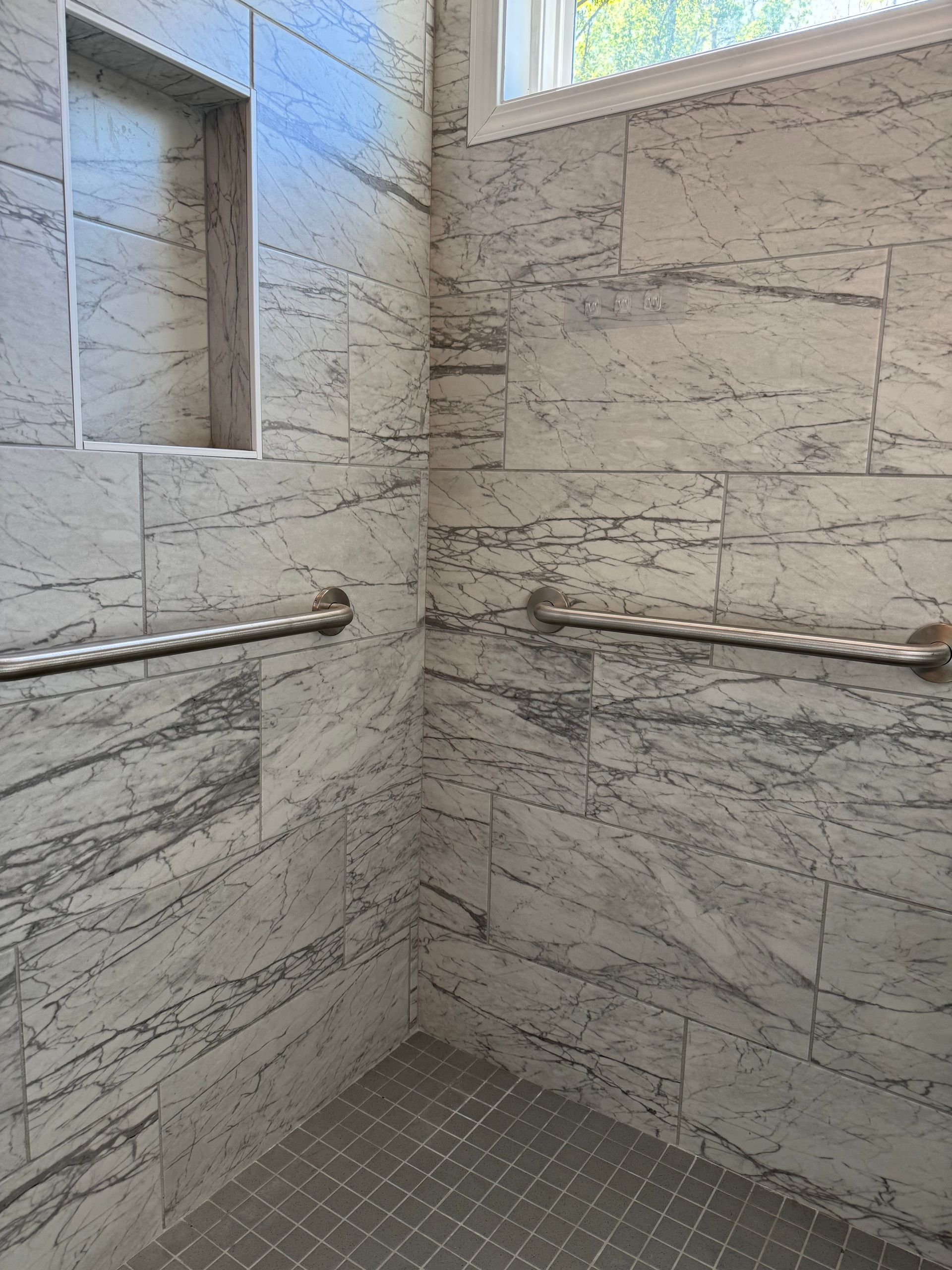
Safety Bars Anchored Into Structural Support
Shower Grab Bar Installation in Canton for bathrooms requiring accessibility modifications and fall prevention measures
Grab bars installed into tile or drywall without hitting studs pull free under body weight, creating more danger than security. Your Home Handyman installs grab bars in Canton bathrooms by locating framing behind shower walls and fastening hardware into structural support, not just surface material. Aging-in-place modifications across the Atlanta metro increasingly focus on preventing falls in wet environments, and correctly positioned bars rated for weight capacity make the difference between a secure hold and a cosmetic fixture that fails when needed.
Installation requires confirming stud location behind tile, fiberglass, or drywall, then selecting anchors that penetrate the surface and engage the framing. Bar positioning follows ADA guidelines when applicable, placing horizontal bars at heights that allow for balance support during entry, exit, and bathing. Homes without accessible studs in ideal positions require blocking installation or heavy-duty anchors rated for the wall type.
Schedule a property evaluation to assess wall construction and identify anchor points for grab bar placement in your specific shower layout.
What Changes After Grab Bars Are Installed
Installation begins with measuring bar placement relative to shower entry and seating areas, then confirming what's behind the wall using stud finders or test drilling. Anchors are selected based on whether studs are accessible or whether toggle bolts and backing plates are required for hollow walls. Each bar is leveled, fastened with corrosion-resistant hardware, and tested under pull force before the installation is considered complete.
Once installed, the grab bar provides a solid handhold that doesn't shift or flex under full body weight. You'll notice the bar feels immovable when gripped, and the mounting hardware sits flush against tile or fiberglass without gaps or looseness. Properly positioned bars allow you to steady yourself while stepping over the tub edge or standing from a shower seat without relying on soap dishes or faucet handles that weren't designed for support.
The installation includes bar mounting and fastening into studs or reinforced anchor points, but does not include wall reinforcement if no structural support exists behind the desired placement. Your Home Handyman evaluates wall access during the consultation and discusses alternatives if the ideal position lacks backing.
Answers to Frequent Service Questions
Grab bar installations in Canton bathrooms often raise questions about whether existing walls can support the hardware, how bars are positioned for maximum safety, and what happens when studs aren't located where the bar needs to go.
What wall types can support grab bars safely?
Tile over cement board with studs behind provides the strongest installation, while fiberglass shower surrounds require longer fasteners that reach through the panel into framing. Drywall installations depend entirely on hitting studs or using toggle bolts with backing plates rated for at least 250 pounds of pull force.
How are grab bars positioned to prevent falls effectively?
Horizontal bars installed 33 to 36 inches above the shower floor provide balance support during entry and exit, while vertical bars near the shower controls help with standing stability. Angled bars mounted at 45 degrees offer leverage for lowering and raising from seated positions, and placement varies based on individual height and mobility needs.
What happens if no stud exists where the grab bar needs to be installed?
Heavy-duty toggle bolts or snap anchors rated for wet environments can support grab bars in hollow walls when studs aren't accessible, though these anchors require thicker drywall or backer board to function safely. In some cases, repositioning the bar a few inches allows for stud attachment without compromising usability.
Why do tile installations require different hardware than fiberglass surrounds?
Tile is brittle and cracks if fasteners are over-tightened or drilled without proper bits, so installation requires carbide-tipped masonry bits and careful torque control. Fiberglass flexes and requires backing washers to distribute pressure, preventing the material from cracking around the fastener over time as the bar is used.
When should grab bars be installed in Canton homes without current mobility limitations?
Proactive installation makes sense during bathroom remodels or before aging relatives visit, since adding bars after a fall often happens during recovery when mobility is already compromised. Homes in Broadwell and surrounding Bartow County neighborhoods see increased demand for aging-in-place modifications that allow residents to stay in their properties long-term without accessibility barriers.
Your Home Handyman handles grab bar installation across tile, drywall, and fiberglass shower walls in Canton. Call (678) 693-3363 to discuss wall type, bar positioning, and anchor options for your bathroom's specific layout and construction.